
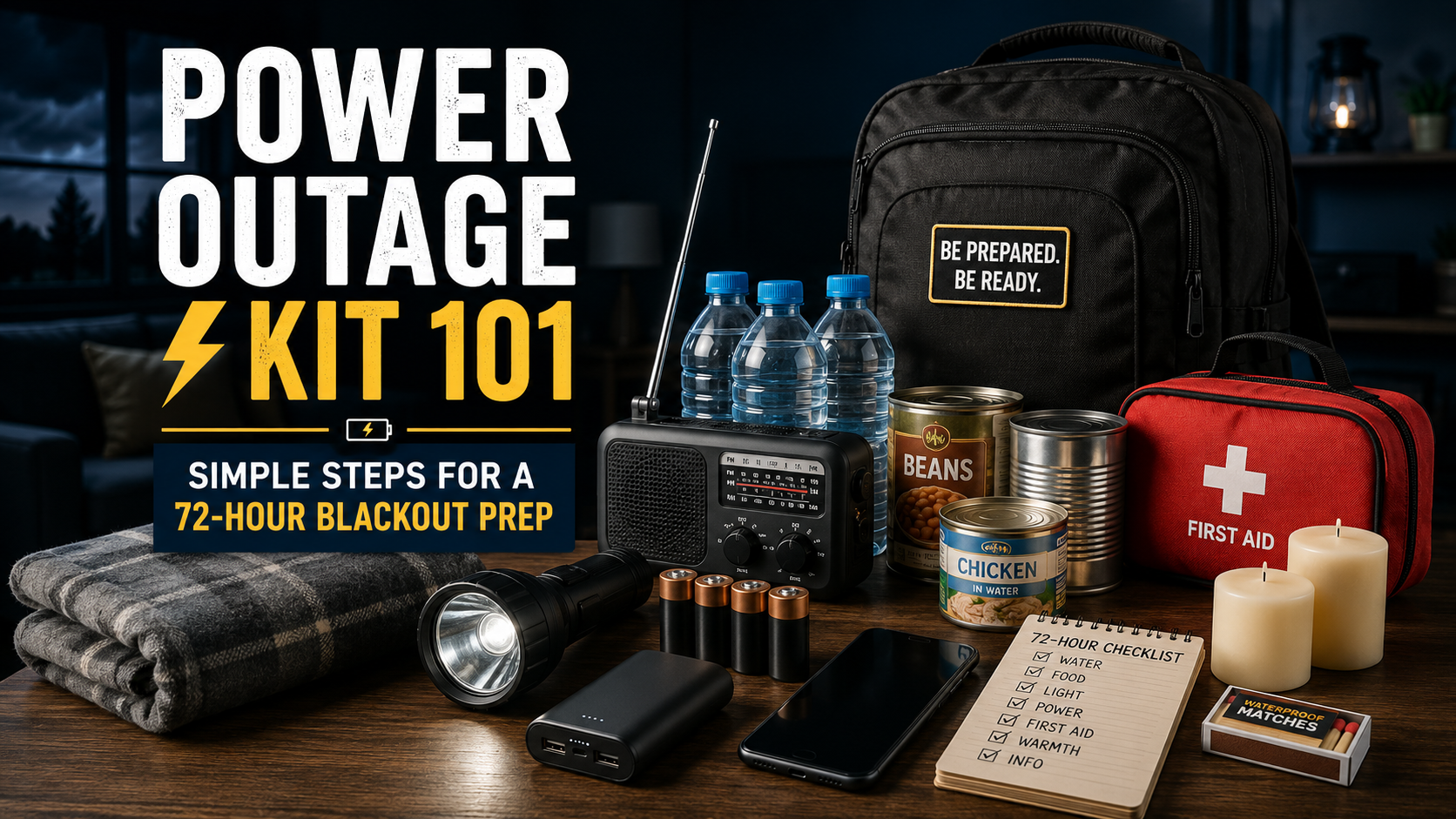
Power Outage Kit 101: Staying Safe When the Lights Go Out
Don't panic about blackouts. Learn how to build a simple, smart 72-hour power outage kit with easy steps.
Quick Answer
If the power goes out, you need a basic power outage kit. This kit should last at least three days (72 hours). Focus on food, light, water, and first aid. Keep it together so you can grab it fast.
Short Definition
A power outage kit is a box of supplies. It helps your family stay safe and comfortable when electricity stops working. It is your go-to plan for a short blackout.
Why This Matters Now
Things change fast. Sometimes, big storms hit. Other times, local issues cause blackouts. You do not know when it will happen. Being ready means you do not have to panic. It means you are in control of your first few days.
We are talking about being prepared for a short time. Three days is enough time to wait for help or for power to return. This is smart, calm planning, not fear-mongering.
The Simple Plan
Your goal is simple: Survive and stay safe for 72 hours. Do not try to plan for weeks. Keep it small, manageable, and focused on the basics. Think about what you use every single day.
Here is what we focus on:
- Water: Drinking water is number one.
- Food: Non-perishable items that need no cooking.
- Light & Power: Flashlights and extra batteries.
- Health: First aid and basic medicine.
What To Do First
Do this first: Make a family plan. Talk to everyone in your house. Everyone needs to know where the kit is. Everyone needs to know what to do when the power goes out. This conversation is more important than buying supplies.
Next, check your current supplies. Do you have enough flashlights? Are your batteries old? A quick check saves a big headache later.
What To Do This Week
This week, focus on one area: Water storage. Buy or gather enough clean drinking water for every person. Plan for at least one gallon per person, per day. This is a non-negotiable item.
Also, check your batteries. Buy a set of fresh, reliable batteries. Knowing you have power for your lights is a big comfort.
Gear That Can Help
You need reliable tools. Do not buy things just because they sound cool. Buy what you actually need for a blackout.
- Flashlights & Headlamps: Headlamps are great because they keep your hands free. Use them to check things around the house.
- Battery-Powered Radio: This lets you hear official news. It works when cell towers are down.
- Manual Can Opener: Canned food is useless if you cannot open it. This is a small, cheap item that saves a lot of hassle.
- Water Filtration Straws: These can clean questionable water sources. They are good backup gear.
- Portable Power Bank: Keep your phones charged for emergency calls. Make sure it is fully charged *before* you need it.
Power Generator:You may want to also have a power generator with extra gas or propane.
Budget Picks, Better Picks, And What To Skip
Budget Picks (Good for starting out):
- Basic flashlight and extra batteries. These are cheap and cover the most basic need: light.
- Canned beans and peanut butter. These are calorie-dense and last forever.
Better Picks (Worth spending a little more):
- A multi-day water filter system. These offer more peace of mind for water safety.
- A hand-crank radio/charger combo. This means you don't need batteries for your news source.
What To Skip For Now:
- Fancy, large generators. These are loud, need gas, and are often overkill for just 72 hours. They are also a safety risk if used wrong.
- Overbuying gourmet food. Stick to simple, shelf-stable basics. You do not want a huge, expensive pantry that goes bad before you need it.
Common Mistakes to Avoid
- Forgetting the Water: People forget water. Remember: 3 days means 3 gallons per person. Plan for more.
- Relying Only on Phones: Cell service can fail. Always have a battery-powered radio as a backup news source.
- Buying Too Much: Do not buy enough food for a month. Keep it to 3-5 days. It is too much bulk and too much money.
7-Day Action Plan
Day 1: Plan. Write down your family’s communication plan. Designate a meeting spot outside your home.
Day 2: Water. Gather and store your water supply. Check expiration dates on all stored water.
Day 3: Light & Info. Buy fresh batteries and a battery-powered radio. Test all flashlights.
Day 4: Food Prep. Buy 2-3 types of non-perishable food. Store them in an easy-to-reach spot.
Day 5: First Aid. Check your first aid kit. Add any necessary daily medications for family members.
Day 6: Review. Go through your entire kit. Is everything together? Is it easy to carry out the door?
Day 7: Practice. Walk through the plan. Pretend the power is out. This makes the plan real and easy to follow.
Bell Bot Watch Signal
We are seeing reports of strange lights and objects in the sky. While this is unusual, it does not mean the power grid is failing. It is just something to note. Keep your focus on the reliable, physical preparations for a blackout. Stay calm and stick to your plan.
Quick Answers People Ask
Q: How long should my kit last? A: Aim for a minimum of 72 hours (3 full days) for every person in your home.
Q: Do I need a generator? A: Not for a short blackout. They are complex and can be dangerous. Stick to battery and manual power sources first.
Q: What is the safest way to store water? A: Store it in sealed, food-grade containers. Keep it cool and dark until you need it.
Q: Are candles okay for light? A: No. Candles are a fire risk. Use flashlights or battery-powered lanterns instead. They are safer.
Quick Checklist
- [ ] 3-Day Water Supply (1 gal/person/day)
- [ ] Flashlights and extra batteries
- [ ] Non-perishable food (3 days worth)
- [ ] First Aid Kit (Checked and stocked)
- [ ] Battery-powered radio
- [ ] Whistle (To signal for help)
Bottom Line
Preparation is about reducing worry. A well-stocked, simple kit lets you take care of your family when the lights go out. Focus on these basics. Stay informed, stay calm, and stay ready for the unexpected.


